Friday, 30 December 2022

Reflections on a river, a rainbow, repentance and restitution


A personal reflection…

Thursday, 16th June 2022 was annual Youth Day in South Africa. I never got around to writing this story at the time, but I am glad I stored some thoughts on paper. And now we have just passed the 16th Dec which is Reconciliation Day in South Africa. Somehow I am glad I waited as the 2 annual reminders/memorial days kind of work together for this blog.

What I did write down was a bit of a jumble, so I hope to make some sense of it now. This was also within a day or so of Day Zero in Gqeberha, Eastern Cape on the back of a terrible drought with our dams emptying down to the last trickles of water, and communal taps already installed in anticipation of our taps running dry. It didn’t happen then, and at the 2nd time of writing just over a month later (July), it hadn’t happened yet, but it really could happen any day if rain doesn’t fall in our catchment areas. To add onto this, it is now 6 months later (Dec) and we still have not reached Day Zero, but it looms large as a potential event as our rainfall has been so erratic and not nearly enough, and yet bits of consistency has kept that total ‘run dry’ day at bay.

So, on Wed 15th June 2022, the heavens  opened with heavy rain, it was freezing cold and we had the most brilliant, massive, double rainbow over our City in the afternoon. I saw it out of the window and rushed outside to try and capture a photo. I did manage to take a few, but only of about half each time. Had I had time and a higher vantage point, I may have been able to capture the vastness and brilliance of it. Many people took photos that afternoon.

The rainbow always seems to hold out hope and promise. I know the first one was after the great flood in Noah’s time where God said he would never flood the earth like that again. So often a rainbow appears and the next thing the heavens open, which is what happened on that Wednesday. None of us want a flood, but we almost need some level of flooding to break this drought and fill our dams. There seems to also be a pattern of droughts broken by floods in this region.

I noticed the jokes around this time about our City’s name change from Port Elizabeth to Gqeberha. People were saying the rain doesn’t know where to fall. It saddened me. I had wanted to repost a blog I wrote on Heritage Day 2021 to remind people that pulling against name changes, pulls against national unity.

I was also thinking of the meaning of the name – it’s named after the Baakens River. On Google it says – the river that FLOWS through the City.

I had thought what if it’s got some meaning connected to breaking this drought? To trust God for it to FLOW STRONGLY again?

I was reading a daily devotional from Jeremiah 17 and was blown away with verses 7 and 8.
These verses were applicable in June, and still applicable for right now.

But blessed is the man who trusts in the Lord, whose confidence is in him.
He will be like a tree planted by the water
That sends out its roots by the stream.
It does not fear when the heat comes; its leaves are always green.
It has no worries in the year of drought
and never fails to bear fruit.

We know many plans are being put in place in our City for water provision – communal taps, tankers, bore-holes, fixing leaks, water saving plans, personal water tanks etc, and even more has happened with various other initiatives since I wrote about this a month ago, and even more 6 months down the line. We need these things in place, BUT we continue to trust in God. And we have continued to have some unseasonal downpours, some just a few days ago. (Dec)

Some interesting excerpts from an article written for the Herald by Guy Rogers in 2017, entitled, “The Baakens like you’ve never seen it before,” has this to say:
The whole Baakens River valley let’s the metro breathe. It’s a ‘green lung’ that, through its plants and trees, absorbs carbon dioxide and generates oxygen, alleviating urban smog and countering climate change.

The river brings value to the whole metro!

The earliest visitors to the area were the Southern Khoe people from the Damasqua and Gonaqua clans. Many of the names they gave the area reflect their association with the Baakens, names like ‘sweet water’ and ‘abundance of reeds.’ It is because of them being first people’s to the area that the honour was bestowed, to name the City after the name they, along with the Xhosa people, gave to the Baakens River.

Rainbows always elicit excitement and the one on that Wed certainly did that. Interesting that the promise it carries is to never flood the earth again to the extent of the flood in Noah’s time. It is a covenant of renewal and starting again. It carries protection, hope and promise.


My mind wandered a bit to fathom what could need renewal and starting over again?
What hope and promise do we need for Gqeberha, for South Africa?

Is there a legacy to reflect on here? An inheritance? I cannot think of a bigger over arching issue that has caused such long lasting damage than Apartheid. I saw a comment recently that calls Apartheid a brutal inheritance and that a legacy, according to the Oxford Dictionary,  is long lasting impacts of particular events, actions that took place in the past, and these can be negative or positive. The ‘lasting impacts’ part is what captures my attention. The past has long arms that reach forward into the future.  There are for sure lasting negative impacts from Apartheid that should not be ignored, and if they are I believe we will never truly move forward peacefully in our land. Land was literally taken from under people’s feet. Land that belonged to them. There were people living near the Baakens River, people who named it and these people were chased away, far away! Other people in the City and across South Africa had homes in certain places and they were forcibly removed and also moved far away from City centres. This land, these homes were then taken over by other people who somehow had come to the conclusion that this was now their land, their homes, their neighborhood, including the shops, schools, hospitals, public recreation spaces and places of worship.  (And no compensation was given for what was taken, even to this day very little has been done in this regard, and where it has, it has been well below what should have been given back.) I have been reading ‘The lie of 1652’ by Patric Tariq Mellet over this last year, which has been super helpful in shedding light onto a decolonised history of land.

So when the Day of Reconciliation came around this year, I noticed, surprisingly so, that on the news and streets of social media there was relative quiet. There was one person I noticed reflecting back on the Truth and Reconciliation Commission and the horror stories that were shared there and calling us to not forget and that financial restitution still needs our attention.

I remember back to June and the rainbow and now wondering about repentance, because when there’s a bad drought, that word often rears it’s head. Some people felt there were some spiritual acts of others that needed to be repented of before the drought would be broken. My mind had taken me to repentance of a different kind, a corporate repentance for Apartheid and it’s lasting impacts. At the time I had seen someone writing about corporate repentance, as so often many Christians function within personal repentance only, and many people feel that if they did not, in person, physically or emotionally inflict the pain of Apartheid on someone, that they were now exempt, and chose phrases like “let’s just move on, and get on with life and living" and/or "why do I have to say I am sorry if I wasn't even alive then?” But I believe corporate repentance for actions in the past and the present is a thing. In the Bible we have some examples like the sin of Achan in Joshua 7:1where all Israelites were seen to have acted sinfully from one man’s actions, Daniels prayer of repentance on behalf of Israel and Jesus absolutely died for the sins of the whole world, which in turn invites repentance from all, over all time. In South Africa a group of people chose a certain way and got others to choose it with them and it then travelled down many, many generations to still be functioning today, albeit now no longer within a formal and legal framework. It still lives strongly in too many hearts and minds. We need to stop ignoring this and to start talking about it. We don’t need to be oblivious. We don’t have to stay blind. We really can wake up to what happened and look to what can be done to create a new and better future for all.

We cannot keep saying ‘those were the days my friend. It was so clean, safe and ordered.’ (Some of this commentary comes from a recent Facebook post.) Behind the scenes of that ‘peace’ was a violent and corrupt Government destroying the peace, safety and belonging of a group of people, removing them from land that was theirs, restricting people’s movements, keeping us all apart and killing people. In the name of what? Was it control, power, greed and fear and/or we are better than you and we deserve more land, space, jobs, beaches, electricity, water, schools, medical help, shops, food, money, travel, sport, houses etc. It sounds ludicrous to write all that. It was ugly for sure and many lies were told along the way, lies we believed and acted on. This legacy still lives on. Sure, there have been some fundamental changes, but not enough to right those wrongs. Not enough at all! And what a slap in the face when comments like, ‘we long for those good old days!’ Good for who?

Take a few moments to breathe, think and be silent. Take it all in. Lean in and continue to listen. (We know anger, defensiveness and retaliation can rise up.) Listen to understand that those emotional reactions were surely present among people who had everything violently taken and stripped from them and then had their every movement controlled, family members ripped apart, all decent and nice things taken away. Human dignity destroyed. Left with fetching water in a bucket from a communal spot, not allowed to attend certain schools, universities, shops and movie theatres. Jobs kept aside for certain people, earning capacity very limited, not enough money for food. Not allowed in certain public spaces, toilets and beaches. It makes me sad to type these words. And then we have the cheek to think we are now being oppressed when attempts are made to try and level the playing fields after all the wreckage that was done!! Oh how we need to draw from the generosity of our God and apply that character quality to the here and now in a kingdom response in being generous with our repentance and ask for forgiveness and seek to bring about the restitution so desperately needed.

We also need to do the work of undoing the propaganda pathways that are stuck in brains and hearts. We were all sold the same rubbish, we breathed the same poisonous air and it does not go away on its own. It takes time. It takes work to undo and replace wrong thinking and patterns of behaviour. We have to want it. It’s a personal journey that no-one but we ourselves can do, as it’s our brains and our hearts. But it’s possible. It will be a hope filled and life giving journey. Jesus came to bring life and life in abundance. Let’s take that seriously.

Saying ‘that was wrong!’ or ‘I am so sorry.’ What do we lose in that moment? To me we gain so much more. To acknowledge someone’s painful past. To be present in that moment. To see them. Powerful!! We generally do quite a good job acknowledging painful times, like death or trauma, and we say ‘I am so sorry for your loss or pain.’ Did we personally inflict the pain on the person in those times or were we responsible for the death of their loved one, and yet we are happy to stand with and acknowledge in those times. Why not the same for all trauma, pain and loss? Apartheid certainly created all 3. There is often energy created around a death and funeral. People offer to make meals, give lifts, listen, be there, offer presence. The phrase ‘how can I help/what can I do?’ is often heard. The same energy is needed here. What can we do now? (There are so many resources available, one good starting point could be ‘Another Country’ a book by Sharlene Swartz where she delves into what everyday social restitution can look like.)

Unless we acknowledge our part, we will not be able to begin to undo the ways we have contributed to or continue to contribute to harming others. In Sharlene’s book she helps people to find themselves in the story - what part they may have played, or might still be playing.

It will take humility - another character quality of Jesus.

Some people were physically involved in enacting injustice in Apartheid times, but maybe our part could have been obliviousness, then we can wake up. Maybe it was silence, then we can speak up. Maybe it was allowing things to carry on (then and now), to keep the status quo, then we need to learn how to stop it. Read. Listen to the stories of those who have, and still do experience injustice. Have some deep, critical and maybe uncomfortable conversations. But do the work. We need to get active in fighting back against injustice. We cannot be passive. It will keep perpetuating itself over and over again. (We have yet another unacceptable and awful December holiday racist incident that proves this point. It’s clearly not over and we really do have the power in our hearts, heads and hands to bring about the necessary change.)

I know there is much going on in South Africa that’s not ok. Let’s not allow that to distract us from this vital conversation about what we need to do in regards to the past (and present) when it comes to addressing what Apartheid did and continues to do.

We serve a generous God. How are we being generous with repentance and forgiveness? Are we longing for unity? Are we desperate enough to see change in our country? Are we willing to realize that it could start with me? In Ephesians 1 we see how God gives us everything we need for unity by lavishing every spiritual blessing on us to bring all things in heaven and earth together under Christ. In Philippians 2 he calls us to be imitators of Him - being humble, considering others better than ourselves, looking to the interests of others, being a servant to others. It is all possible with Christ as our example. His lavish grace is sufficient for all our needs. We don’t need to do this alone, but we do need to be obedient to the call of the cross, sacrifice to the point of death. He calls us to give our all. We want the strong flow of God’s Spirit to flow in and through us, and I believe as we do that, as we live in obedience to what he requires of us, to experience on earth as it is in heaven, that our rivers will flow strongly again too. If my people, who are called by my name (Ephesians 1:4) will humble themselves (Philippians 2:3)and pray, seek my face, turn from their wicked ways (repent from our past actions in this land), then will I hear from heaven and heal their land. Let justice flow like a strong and mighty river. Let us see the redemption of our God in this beautiful land of ours. 

Friday, 24 September 2021

Name changes and National Identity


Name changes speak to a new identity. Name changes have been happening around the world since time immemorial. This is not a new phenomenon.

World maps are updated to accommodate any new changes to towns, cities, rivers or countries. Marriage is another example. Our one daughter was recently married and chose to take her new husband's surname. Two have become one - a new identity - and the name change reflects this. Name changes are almost always connected to a new identity. In adoption, a child who is placed in a new family will take the surname of that family. In the Christian faith we see in the Bible how God changed the names of certain people for specific identity purposes or for new direction/new beginnings.

Identity is the distinguishing characteristics or personality traits that are specific to a person, couple, family, religion, group of people or country.

National identity is a sense of nation as a cohesive whole, as represented by distinctive traditions, culture and language. (Oxford Dictionary)

A national identity can be built around liberal and democratic political values and around the shared experiences that provide the connective tissue allowing diverse communities to thrive. (www.abc.net.au)

As a collective phenomenon, national identity can arise as a direct result of the presence of elements from the 'common points' in people's daily lives : national symbols (flags, anthem, flowers, animals, statues, food, dress, music, names, landmarks and places), language (In South Africa 11 languages), the nation's history, national consciousness and cultural artifacts. (Wikipedia.org) (Italics - author's own comments)

The history of South Africa shows that different approaches have been employed to develop South African national identities. These approaches, however, could not produce a single national identity. When the Govt of National Unity (GNU) came to power after the first democratic national elections in April 1994, a new chapter was opened for the country to search for a new South Africanism. (https.//www.jstor.org/stable/41147123)

When there are societal power shifts in countries, name changes will often follow to align with the new identity that is being formed.

In South Africa we have the sad legacy of Apartheid and the national identity had been previously shaped by those in power. In 1994 a power shift took place and Apartheid was legally dismissed. It became critical to form a new national identity, which meant getting rid of anything that linked the present to the oppressive past. (I realise that not all name changes have been directly linked to Apartheid or colonization. Sometimes it's a case of newly acknowledging someone or a group of people.)

"National identity is a strong indicator of the level of social cohesion or polarization in a country." M. F Ramutsindela 

Our new flag stands for 'Unity in diversity, nation building and social cohesion.' (Gov.org.za) It makes sense then that anything that does not align with this vision and unity should be changed/replaced if we have any hope of finding a shared national identity.

We have already had many name changes, from streets to towns to cities to airports etc that people have become very accustomed to and normalized in our sub conscious. These are often renamed after people who have been heroes or icons in bringing about change and fighting for freedom from oppression.

Nathi Mthethwa had this to say, "It is part of transformation purposes. It is a critical component of the heritage landscape as a whole. The names of places we live in reflect the identity and cultural heritage of the people of South Africa."

'Own lane' or individual thinking versus 'big picture' or collective thinking is what can destroy transformation processes and unity that have already been achieved.

I live in a City and Province where there have been some recent name changes and this has had some positive acknowledgment of it from some, but huge pushback and indifference from many. I find this sad and hope that people would critically evaluate their responses. Let's look at this through a new lens this Heritage Day 2021 and rather welcome and embrace the changes that go towards finding a shared national identity. By using names that acknowledge those who fought against the past, names that acknowledge people who were first indigenous to this land and names that work towards the collective whole of this new South Africa we are still trying to build together. I know change can be difficult and it can take time for it to assimilate inside of us, but let's not look at it as a cancelling or a loss, but rather as an addition towards something new, something that will draw us forward into a far better, inclusive and diverse future. New beginnings, new hopes and new dreams for all.

Sounds the call to come together.
And united we shall stand.
Let us live and strive for freedom, in South Africa our land.

Sunday, 21 February 2021

Justice is at the core of love


Justice is at the core of love. We have heard how we should live and treat others - Love must be sincere, be devoted to one another in brotherly love, honour one another above yourselves, share with God's people who are in need, practice hospitality, live in harmony with one another, to live at peace with everyone if at all possible, to do what is right in the eyes of everyone, be willing to associate with people of low position. To let no debt outstanding except the continuing debt to love one another, for he who loves his fellowman has fulfilled the law. Love your neighbor as yourself. Love does no harm to its neighbor. Let us behave decently and clothe ourselves with the Lord Jesus Christ. (Parts of Romans 12 and 13). That's quite a comprehensive and easy to understand list. This should be easy to do. Let's spur one another on to live lives that Jesus calls us to live.

We can see above many specifics as to what the characteristics of a Jesus follower are and the Bible is filled with many more. In 1 Corinthians 16:14 we are reminded to do everything in love. Everything!

I wanted to understand a little bit more about what this word justice means. In the dictionary we read that it means 'being just, fairness, moral rightness, rightful, lawful, genuine respect for people, a concern for peace.'

Acting justly in life is being faithful to the original concept/intentions that God had for this world. We are acting true to ourselves as representatives of his kingdom when we treat people justly and fairly. (Terry Weber)

Martin Luther King says this - "Justice at its best is love correcting everything that stands against love."

Cornel West says "Justice is what love looks like in public." It is seen in our behaviour and treatment of people. Jesus instructed us to love our neighbours as ourselves which means we acknowledge and accept their intrinsic value and worth. Justice and equity morphs into the language of love, compassion and kindness. We don't say 'be just to your brother/sister', but rather we say, 'be kind, or love your brother/sister.'


We recently had a 'love in action' week at our church where we basically used the Love Languages (one for each day) of encouragement (words of affirmation), acts of service, gifts, quality time and showing honour to someone. It was a fantastic initiative. Those who engaged had great testimonies to share. I also found it very meaningful, but I also had the same feeling that many experience around Mandela Day in South Africa where we have come to say, 'Make every day a Mandela day.' Here's a great quote by Nelson Mandela, "No-one is born hating another person because of the colour of his skin, or his background, or his religion. People must learn to hate, and if they can learn to hate, they can be taught to love, for love comes more naturally to the human heart than its opposite." Dr Caroline Leaf, the well renowned neuroscientist says 'we are wired for love.' We are called to actively love every day and to do everything in love. 'Make every day an acts of love day.' Another thought I had was that the term 'racial justice' is not often included into our actions of love towards our neighbours. 

Jordan Black says "Racial justice is revival." It absolutely could change our world into something like we have never seen it before. We have been so wrong in the past in treating people of colour as 'less than'. We have believed a lie and we need to bring the truth back into the picture and restore humanity to all people. We need to let the world feel the Father's love through our love actions and feel his blood flow through our veins as we reach out in love. Justice should spring out of love. Some wrongs need to be put right on the back of asking for forgiveness. The world should see Jesus in our eyes, words and actions. Our actions need to be about restoring that which God originally intended for this world. My life should tell the world of who Jesus is. The truth of God's word helps us recognise the lie.

We have heard this statement over the last year (2020) where there have been many global marches to bring awareness to racial injustice, 'no justice, no peace.' and Martin Luther King helps us further understand this when he said, "true peace is not merely the absence of tension, it is the presence of justice."

This kind of disruption has brought global change and we should take note that at the heart of what is being asked for by people of colour is to be treated as equal. As Jesus followers we should whole heartedly support that call and make sure it happens. There should be no debate.


In Micah 6:8 we are told to 'do justly, love mercy and walk humbly with our God.' Mercy can also be seen as kindness. Compassion leads us towards kindness and mercy. God showed us the greatest mercy when he died on the cross and offers us forgiveness from sin. It's his kindness/mercy that leads us to repentance. He expects us to show mercy to others too. We do this by showing that we belong to his kingdom by living out a different set of standards/guidelines/values. We get to be salt and light. As a Christ follower we should be leading the way as to what being like Jesus looks like - and love and mercy are the guiding signposts. We will be known by our love. He is a faithful God who set up an everlasting covenant with us. We show our love for him by our obedience to his commands and our faithfulness in serving him. We should look very different. There should be no confusion as to who we follow by the way we live. How are we doing with our thoughts, actions and words towards those who look different to us? It's in you Jesus that I live and move and have my being. What does that mean? To be in Jesus is to follow him and his ways, words and commands. We need to be responding differently in how we treat other people. Every person on our earth has been made in the image of God. We respond very differently when our very being is in him.


Jesus was humble. His leadership style was servant led. He never treated anyone as less than anyone else. All are equal in his sight. Humility leaves us open to life long learning and wisdom. It opens the door to truth. It makes us aware of who we truly are and how much we are in need of God in our life. It allows us to lean in and listen and learn even if a new truth/understanding/piece of information is uncomfortable at first, even if it shows up sin and wrongdoing that needs correction and a new way of doing things. The last part of that verse says to walk humbly with our God. Walking and talking with God shows deep relationship and for that to continue, humility needs to exist. A statement I have often quoted that comes from some training my husband does is, 'we need each other to see all there is to see.' That statement is all about vulnerability, humility and interdependence. If we could function like that in our world with people of all colours, nationalities and cultures we truly would have revival on our hands. That's my dream, hope and vision to see that while I am still in the land of the living. 


Sunday, 13 September 2020

Holy Spirit Blue - a poem


A poem inspired by a word in church this morning on the colour 'blue', the worship and the sermon on Psalm 121)

Wash over with peace
Wash over with healing
Roll in like a river
Roll out like a river
Spill and splash onto others
Jesus, Jesus you silence fear
Jesus, Jesus your promise still stands
Jesus, Jesus you are still enough
Great is your faithfulness

Look up!
Hope in our hearts
Hope in our lungs
Hope in our minds
Help comes from above
No heart cry, no tear escapes his watchful eyes

Look up!
Take courage
Rest in his shade
He's there. He's still there
You are standing. You are still standing

Look up!
Look beyond
Push through those dark clouds
Look beyond
His promise still stands
This is our God
He is still with us
He never sleeps
He never slumbers

Love poured out
Love filled my world with grace.

Look up!


Perspective


I was immediately drawn to these bright plastic sunglasses left behind by a child at the beach. My family thought I was a little nuts crouching down to get the shot I wanted!

Different angles, different levels and different perspectives are all important in the way we view life. Sometimes we need to get down on our hands and knees and sometimes we need to climb up high. Sometimes we need to look through or next to or above to find what we need.

Sometimes we need to forge forward and go after something with great force and other times we need to stand back, let go. trust, breathe and have faith.

Isaiah 58:11 The Lord will guide you always, he will satisfy your needs in a sun-scorched land and will strengthen your frame. You will be like a well watered garden, like a spring whose water never fail.

Monday, 10 August 2020

Flowing outlet or stagnant tank


I wrote this piece during level 5 lockdown when I was seeing a lot of my garden with walking 17 laps on a daily basis. I tried to find new things to photograph and enjoy on a daily basis. Sometimes it was an analogy.

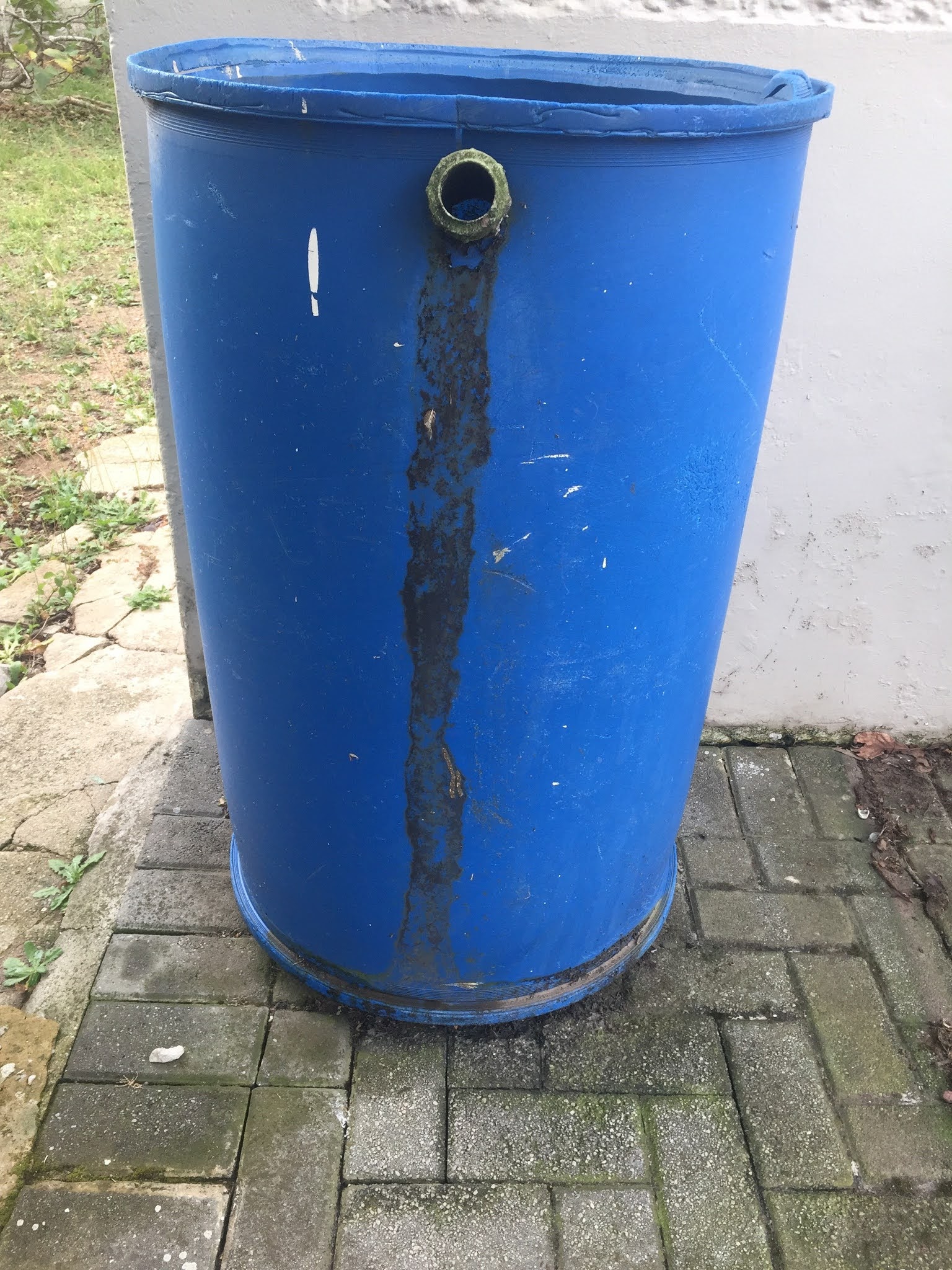
We have a water tank in our back garden. It collects water from the run off on the corner of the roof. But it has no natural or easy outlet at the moment. It needs a connection at the bottom that we can then attach a hosepipe to. If I want to use the water inside, I have to fill back breaking buckets full, hence it pretty much gets ignored.

Guess what the insides look like? Black, slimy sludge. 

The dictionary says this of stagnant water: A body of water in a confined space having no current or flow and often having an unpleasant smell as a consequence.

Stagnate means no activity. It got me thinking to the Christian life and what happens when we stagnate. This past Sunday our pastor preached on James 2 - Faith and Deeds, and it prompted me to finish  putting this blog together. When we stagnate we stop developing, stop growing, progressing or advancing. Our mind goes to sleep. When we are without current or circulation we become unproductive,ineffective, sluggish and dull. 

No outlet means no freshness, no new life and vitality is lost. We become bored, stop learning and don't use our skills and talents. That tank is no good without an outlet, it smells and is probably a breeding ground for all sorts of undesirable things like mosquitoes and moss. Idle hands and idle minds are a space for evil to flourish.

It was interesting to see during lockdown in South Africa how it was easy to have less activity taking place. It was unusual times and rest was necessary for many. It's okay to stop and rest a while and not engage, but we can't stay there. It's not healthy for us.

As people we generally like action on the part of others. People who have important jobs and positions - we want action. Just think how we have had these expectations of our President in response to Covid-19. It's an expectation in our world.

God speaks about being active in his service. He is not slow to act. We are told in James that faith without works is dead, like a literal rotting corpse. Look at the inside of that tank - imagine if that's what we want the world to see our faith as? God says do not become weary in doing good. He also says, renew your mind, obey my commands, follow me, come to me, help others, tell the good news, worship, do acts of service, pray for others, present your requests, go into all the world, make fishers of men, give, love one another, serve others, encourage others, run the race, work out your salvation, read his word, sing, make music, dance! That's a pretty active life that he expects us to live.

There are always spaces for surrender, but surrender, letting go, being still, resting and trusting God are not the same as inactivity. It is an active choice to let go and surrender.

There have been times where I have watered the nearby plants by taking bucket fulls of water out of the tank. Then it creates newness and life. (My neighbour has actually offered to install an outlet at some point.)


What's filling you? Where's your outlet? As we were asked on Sunday, how's your heart? and how are you living as someone saved with the gift of eternal life? Our faith should have a natural working out with fruits in the way we live.
'Faith is active, it is activating and it is lived out.' (Trevor Anderson)

We need to be a channel of blessing to those around us. Are we bringing life, the aroma of Christ or are we just stinking up the place?

There's life inside of all of us, but it's no good if there's no outlet. How do you allow God to flow in, through and out of you? We can't depend on others to do it for us. If it is to be, it's up to me. Our faith should naturally lead to works of service. It validates and authenticates the faith we profess.

One thing lockdown has done is show the vast difference between those who have and those who don't. There have been and still are many hungry people around us. People in our City and country have risen to this occasion in amazing ways in passing on clothing, bedding, household items and food. We don't have to look far to find needs at the moment. We should never be bored - there is always something to do in reaching out to others in their time of need and show people what the Kingdom of God is all about.

We cannot tire in doing good as lockdown continues and beyond. There will always be many practical ways you can stay like an overflowing outlet of God's love, life, mercy and justice to those around you.


Wednesday, 8 April 2020

Well-worn paths


It's lockdown in South Africa at the moment because of the COVID-19 pandemic that has swept across our world. It has caused all sorts of different activities to surface as people are not able to go out unless they need food or medical care. South Africa has been one of the countries with the strictest restrictions with people not even being allowed out to walk their dogs. Some people came up with the idea of doing a marathon in your property over the 21 day lockdown, which means at the very least doing 2km per day. For most this is quite a few laps around your house or garden, for me it's 17 laps.

The other day my son pointed out the paths around the yard of where we had been running and I took a photo, and as I looked at the photo, a whole lot of thoughts came to mind (one being that I hope we don't create trenches before lockdown is over), hence this blog.

God often speaks to me through analogies and I love how the messages stay with me because there's generally a picture or image involved. I am a visual learner - He knows that. It also reminds me of how Jesus used parables when he was here on earth.

As a person keeps walking through the same trail, it becomes a well-worn path... a clear way to go forward. Now, although our garden looks a bit like a jungle at the moment, because we were unable to get the grass cutting guys in before lockdown, I really don't think anyone is going to come and do a trail hike there anytime soon, but I know I have always appreciated when out on a trail or hike and it's visible to see that there have been many before on the same path and so they have created something that is clear to see where to go.

It first of all reminded me of a song we used to sing that had the word ancient paths in it and I went to Google and the Bible to try find some correlating verses. Interestingly I found something written by a man named Nick who was commenting on Psalm 119 with its' 176 verses. he was saying how every verse is a variation of saying the same thing, about how much the writer loves God's law, but each is still different. Jeremiah 6:16 says this, 'Stand at the crossroads and look, ask for the ancient paths, ask where the good way is, and walk in it, and you will find rest for your souls.'


God's Word has been around a long time, but it still offers the same that it offered when it first came from the mouth of God. It gives us direction, hope, comfort and shows us how to live a holy and righteous life. Each word is a well-worn path that shows us a clear way forward. Psalm 119:1 says 'Those whose way is blameless, who walk in the Lord's instruction, are truly happy.'


The other thing that has been spoken about a lot because of lockdown is habits. Many people know and agree that it takes 21 days to create a new habit, so many people were looking to do that. Habits are things that we do repeatedly until they don't become work anymore, they just become normal and a part of us. 

I have read a lot from the writings of Dr Caroline Leaf, a neuroscientist who has put such a new spin on how our brains work that she has made many realise how you really can change what goes on inside your brain. We have a network of 'branches' in our brains and our thoughts are attached to these branches. Our repetitive thoughts (well-worn paths) create grooves in our brain and we can get stuck by having bad thoughts and feel captive to them. (bad habits) With over 60 000 thoughts per day, it's quite important that we make them good and helpful ones. 

So how do we create new habits or better thoughts if we have bad habits or unhelpful ones? 21 days of a new thought or habit is the only way to do it. We cannot unlearn in a vacuum, we have to replace that which we don't want. Dr. leaf suggests that sometimes you need to do another 21 days detox if you haven't changed the belief or habit after the first 21 days. It's another case of well-worn paths.There's an interesting process that happens inside your brain as you change your focus - there's a kind of 'brain glue' that holds our thoughts in place to the various branches or networks. As you start to use deep thinking and change your focus to a new and better thought, it loosens the 'glue' and then it moves to the new thought to hold it in place the more you focus on it. It really is like changing pictures in your brain. Fascinating.

The big question I suppose is what do we want in our thoughts, habits and actions? We become what we repeatedly do. I am thankful for some good well-worn paths in my life, things that have been to my benefit, the primary one being my relationship with God and reading His word over and over again until it is wired into my brain. It has been a lamp and a light to my path.